
As a therapist working solely with lawyers (and a proud former LawCare volunteer) I see the highs and lows of legal practice every day. And the toll that the job can take on people emotionally.
Back in the day, lawyers were told to ‘grow a thicker skin’. ‘Don’t be so sensitive’.
Thankfully, not so much these days. Because we know that it is not possible to be around someone in pain and not pick up and feel a portion of that pain.
There are neurological (not to mention physiological and evolutionary) reasons why we can’t simply teach ourselves not to feel. Convenient as it would be, it would remove our humanity. And perhaps, with AI coming to take over all our jobs, our humanity will be the one thing that remains sacrosanct to us mere humans…
So how can we cope with the emotional demands of the job and the spectre of vicarious trauma?
Emotional surface wounds
The best chance we have is to put strategies and structures in place pre-emptively to protect ourselves. And to ensure that we recognise how vicarious trauma presents and what the ‘warning signs’ might be.
Ruinously empathic or robotic?
One of the chief challenges for lawyers is how do we stay psychologically engaged with our clients whilst not becoming overwhelmed by the emotions we take on.
Because if we’re not psychologically engaged; if we zone out emotionally, then we lose our sense of meaning in the work. And retaining a sense of meaning is one of the key things that protects us from burning out.
So what’s the ‘answer’?
I heard a therapist I know, Carolyn Spring use a lovely term ‘emotional nutrition’ recently. The idea being that we need to ensure we have the building blocks in place in our lives, the buffers in place to protect us. That can come in the form of community, connection, exercise, spirituality/religion. It’s about having your tentacles in several different places (not just in the law) and about experiencing the interconnectedness of life.
Therapeutic supervision/reflective practice has become increasingly common in the legal profession and is much needed. Because having such a space to reflect on difficult feelings lightens the load and helps you to make sense of situations and your feelings around them.
Environmental compartmentalisation
We know, don’t we, that in order to better ‘switch off’ from our jobs, particularly ones with emotive content, we need give our bodies and our brains the right cues. So do the more difficult work in designated locations (ideally the office) if you can. What this also often leads to is incidental sharing with colleagues (if you have them) either about the topic or about anything else, which, again, can lessen the load.
Incidental decompression
Don’t underestimate the power of the commute. That time when physically you’re in motion moving to or away from your place of work is essential in either building up to or ‘coming down from’ the day job.
Develop your own rituals around difficult situations. Some lawyers only feel able to deal with difficult stuff if they have their ‘uniform’ of the black suit and red nails. I have certain places where I go when I need to make tricky calls. It’s also important to develop your own rituals around ‘coming down’ from those situations, like going for a run or, my favourite, jumping on my kids’ trampoline in the back garden.
Which brings me to physical activity. Trauma and distress are held in the body and so, it stands to reason that we need to find physical ways to discharge them. Yoga, running, whatever it is, it will help to lighten the unseen load.
And finally….
Finding ways to cope with the emotions of our work and navigating vicarious trauma is not about trying to become ‘shiny and new’ again. We should, as interconnected humans, be affected emotionally by our work. And we can’t (no matter how many ‘social media experts’ insist you can…) ‘recover from vicarious trauma in three easy steps).
A friend of mine who runs a counselling service at a women’s prison put it beautifully to me a few years ago when he said he saw it as almost his “duty” to take on some of his clients’ pain (which is acute, given most women in prison are victims of trauma themselves). He thought of the pain as like shards of glass. And he felt that, if he could take on just one of those shards for his clients, if he could feel some of that pain, purely through bearing witness to it, then he was being of service to them.

Annmarie Carvalho
Annmarie is a multi-award winning therapist, trainer and public speaker. Before retraining to become a therapist, she was a family solicitor and mediator at Central London law firm Farrer & Co for over a decade.
Annmarie set up the therapy, training and coaching agency, TCC in 2018 with a mission to provide better mental health support and improve psychological understanding amongst lawyers and those working in and around the legal profession.
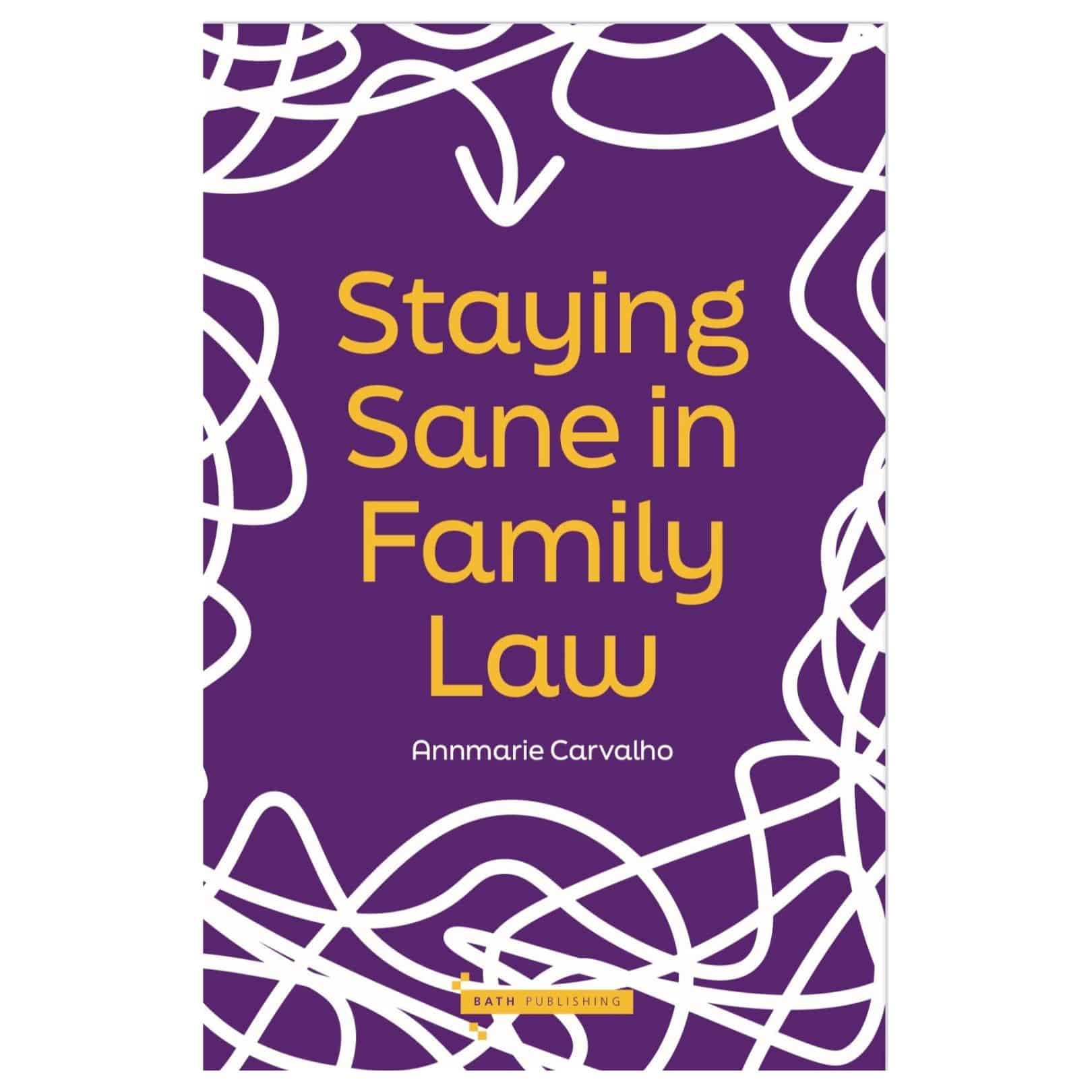
Staying Sane in Family Law
Annmarie’s first book ‘Staying Sane in Family Law’ was published in 2025 by Bath Publishing.
While it is primarily aimed at family and private client lawyers, the book has universal applicability for anyone working in the emotionally high octane world of law.
We're here to listen… without judgement
Contact our free, confidential, emotional support service for the legal sector
Sign up to our newsletter to receive regular support, tips, guidance and news on mental health in the legal sector.
"*" indicates required fields